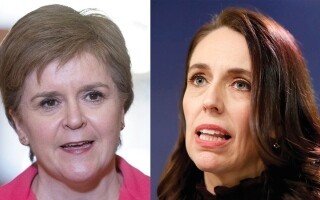
Former New Zealand Prime Minister Jacinda Ardern compared her political experience with that of former Scottish First Minister Nicola Sturgeon. Ardern, during a visit to a Glasgow theatre after a screening of a documentary about her life as Prime Minister, stated that politics is not the place to devote her energy, but she confirmed that she did her best when she was Prime Minister. Ardern, who left politics after leading her country's Labour Party until 2023, said she hopes the film will help humanize politicians. Sturgeon, who resigned as Scotland's First Minister in 2023, praised Ardern's 'empathy, courage, and intelligence' while writing her memoirs. The documentary film, titled 'Prime Minister', sheds light on Ardern's handling of the COVID-19 pandemic, the Christchurch mosque shootings, and how she became a mother. After the screening, former leader of the Scottish Labour Party Kezia Dugdale hosted a discussion with the New Zealand guest, asking Ardern about the exhaustion she faced as a politician and how it compares to Nicola Sturgeon's experience. Ardern said: 'It's relentless to the point where I think five years can feel like 10 years,' adding: 'You are in an environment where news breaks in the early morning, you need to respond by mid-morning, you need to solve the problem by mid-afternoon, or there will be immediate reactions, and then political demands for responses,' confirming that she gave her all in politics. Ardern continued: 'For all that I gave, politics was not the place to devote my energy. I couldn't shake it off, it was a big part of the system, and I wonder if that was Nicola Sturgeon's experience too.' Ardern revealed that her memoirs, which were almost titled 'Steadfast', reference the legacy of her Scottish clan, Macrae, known for their strength through crises. She explained that the clan's motto is 'Steadfast', noting that her grandmother was from Bathgate and that she plans to visit the town of West Lothian during her trip to Scotland. In response to questions from journalists after the discussion, Ardern dismissed suggestions from some commentators that her experiences with misogyny played a role in her decision to step down. Ardern said she has a 'message for women in leadership positions and for girls who are thinking about taking on leadership roles in the future' that 'you can have families and hold these positions, you can lead in your own way'. The event, held in Glasgow, was the only one Ardern personally attended for the film 'Prime Minister' outside of London. The documentary film won the audience award at this year's Sundance Film Festival and will be released in cinemas across New Zealand soon. When the coronavirus emerged, former New Zealand Prime Minister Jacinda Ardern had not only political skill but also luck, especially at the beginning. It seemed that New Zealand had miraculously escaped the worst of the pandemic, but then a new wave hit the country, Ardern's poll numbers dropped, and a new crowd of anti-vaccine right-wingers set up camp outside Parliament. The new documentary about Ardern shows how her critics stoked emotions against her, tracing her unexpected rise to lead her country at age 37 and how she became leader of the Labour Party in 2017 after her predecessor's sudden resignation following a formal public opinion poll that painted a bleak picture of the party's chances in the upcoming general election. However, Ardern was elected leader of the party without the usual preparation for a potential leader. Ardern dismissed suggestions from some commentators that her experiences with misogyny played a role in her decision to step down.